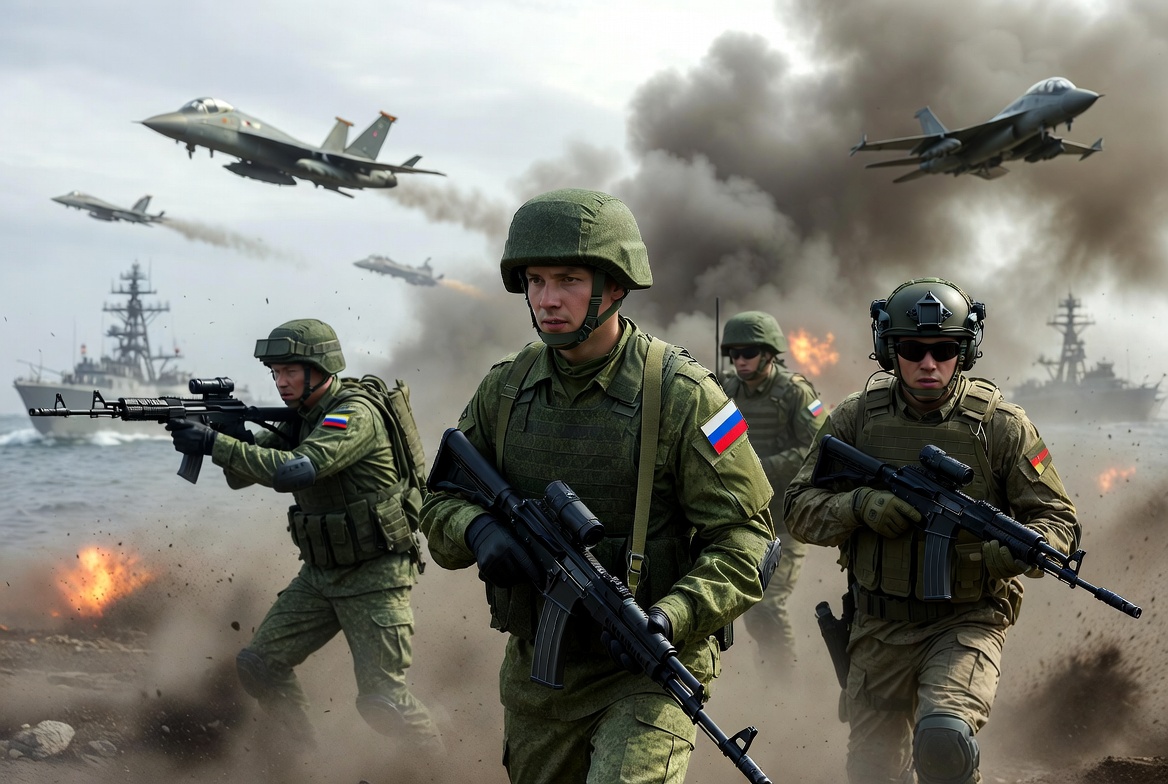
A gathering storm is brewing that could pull Russia and China into a direct conflict with America
(OPINION) There are moments in history when the future announces itself not with a single thunderclap, but with a series of distant rumbles — easily dismissed at first, until the ground begins to shake beneath our feet.
Many believe we are living in such a moment now. Across continents and oceans, the language of leaders, the movement of armies, and the alignment of global powers all point toward a dangerous truth: the world may be drifting toward a conflict far larger than any single nation, one that could draw in Russia, China, and the United States in ways unseen since the last century’s great catastrophes.
For decades, Europe lived under the comforting illusion that major war had been banished to the pages of history books. That illusion is now unraveling.
Governments are quietly preparing their populations for hardship, scarcity, and sacrifice. Military budgets swell. Civil defense plans resurface. Leaders speak openly of a war resembling the one their grandparents endured — words that would have been unthinkable just a few years ago.
This is not the language of confidence. It is the language of foreboding. When those entrusted with the safety of nations begin to warn their citizens to prepare for large-scale war, it suggests that the threat is not theoretical, but looming.
From Moscow, the message is unmistakable: Russia does not intend to yield. Instead, it mocks Western leadership, deploys advanced weapons closer to adversaries, and dares its opponents to test its resolve. These actions are not merely symbolic. They are signals — warnings written in steel and fire.
More troubling still, Russia is no longer confining its posture to Europe. It has begun issuing sharp warnings regarding conflicts far from its borders, declaring that certain actions by the United States could prove “fatal mistakes.” Such language is not chosen lightly. It reflects a worldview in which confrontation is expected, perhaps even inevitable.
As history has so often shown, oil is rarely just oil. It is power, leverage, and bloodshed wrapped into one. The escalating standoff over Venezuela’s oil exports has transformed an economic pressure campaign into a geopolitical powder keg.
When great powers challenge one another over energy, the consequences tend to ripple outward. Russia’s vocal defense of Venezuela is a reminder that alliances extend beyond geography. What begins as a regional dispute can quickly become a test of dominance — a question of who truly governs the global order.
China’s voice has joined the chorus of opposition to U.S. actions, offering diplomatic backing to Venezuela while deepening its strategic alignment with Russia. While Beijing speaks the language of restraint, its positioning reveals something deeper: a world dividing into rival camps, each convinced it must resist the other or risk decline.
China may not seek open war — but neither did many powers on the eve of past global conflicts. Support need not come in the form of soldiers to be decisive. Economic leverage, strategic coordination, and political unity can all serve as accelerants when tensions ignite.
History whispers a chilling reminder: world wars do not begin because nations want destruction. They begin because leaders believe they can control escalation, because alliances harden, because pride outweighs caution, and because warnings are ignored until it is too late.
Multiple theaters are now active. Europe smolders. The Americas tense. Asia watches and aligns. This is the very pattern that precedes great upheaval — not chaos, but order turning rigid, brittle, and ready to shatter.
Diplomacy still exists. Treaties remain on paper. Deterrence still restrains the worst impulses of power. But restraint is fragile when rhetoric grows harsher and weapons move closer to confrontation zones.
The danger is not intent — it is miscalculation. A naval incident. A blockade enforced too aggressively. A strike misunderstood. A response that comes too fast to reverse. History teaches that once momentum overtakes reason, even those who wished for peace find themselves carried toward war
The signs are no longer subtle. Europe is preparing for war. Russia is warning the world it will not be sidelined. China is positioning itself for a reshaped global order. Energy, power, and pride are converging into a volatile mix that has undone civilizations before.
Whether this moment becomes the brink — or the beginning — remains unknown. But the world stands at a crossroads where complacency is no longer an option. When the watchmen raise their voices and the nations steel themselves, history is usually on the verge of turning a page written in fire.