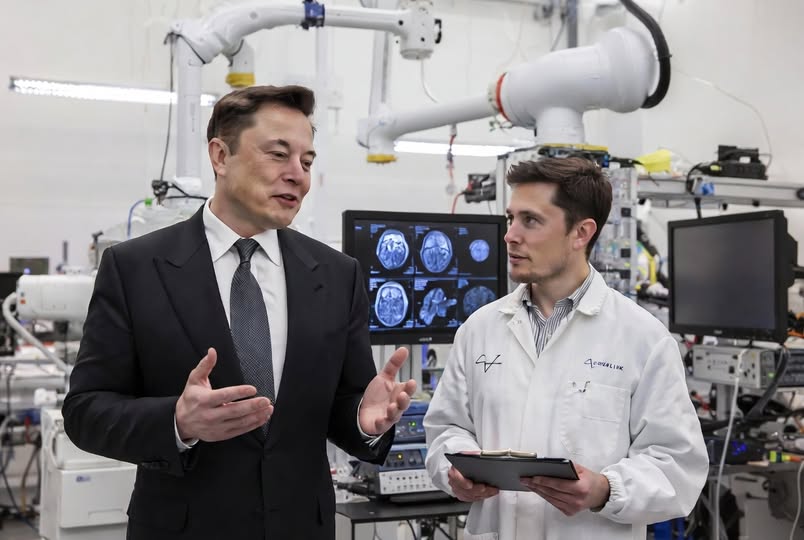
Neuralink, the brain-computer interface company co-founded by Elon Musk, is preparing for a dramatic scale-up in production, with plans to manufacture brain implants in high volumes by 2026.
According to reporting from Reuters, Musk said the company intends to transition from limited clinical use to mass production while also introducing fully automated surgical procedures to implant the devices.
He stated that Neuralink “will start high-volume production of brain-computer interface devices and move to an entirely automated surgical procedure in 2026.”
This announcement represents a major milestone for the company, which has spent years navigating regulatory scrutiny and technical hurdles.
Neuralink received approval to begin human clinical trials in 2024 after the U.S. Food and Drug Administration initially rejected its application in 2022 due to safety concerns.
Since then, the company has focused on demonstrating that its technology can be safely implanted and function reliably in real-world conditions.
The brain implants are designed primarily to help people with severe neurological impairments, including paralysis and spinal cord injuries.
The device works by interpreting neural signals and translating them into digital commands, allowing users to interact with computers, phones, and other devices using only their thoughts. Musk has described the technology as a way to “restore autonomy” to individuals who have lost physical mobility.
Early human trials have already produced striking results. According to Reuters, patients implanted with Neuralink’s device have been able to play video games, browse the internet, control computer cursors, and communicate online without physical movement.
These demonstrations have helped validate the concept and fueled optimism about broader applications of brain-computer interfaces in medicine.
By late 2025, Neuralink reported that 12 people with severe paralysis had received the implant and were actively using it. This growing number of successful cases is a key factor behind the company’s confidence in expanding production.
Musk emphasized that automation will be critical to scaling the technology, allowing implants to be placed more efficiently and consistently than traditional surgical methods.
Financial backing has also strengthened Neuralink’s position moving into this next phase. The company raised hundreds of millions of dollars in new funding in 2025, signaling strong investor confidence in both the technology and its long-term potential.
With regulatory progress, real-world patient outcomes, and increased funding aligned, Neuralink sees 2026 as a turning point in making brain-computer interface technology available on a much broader scale.