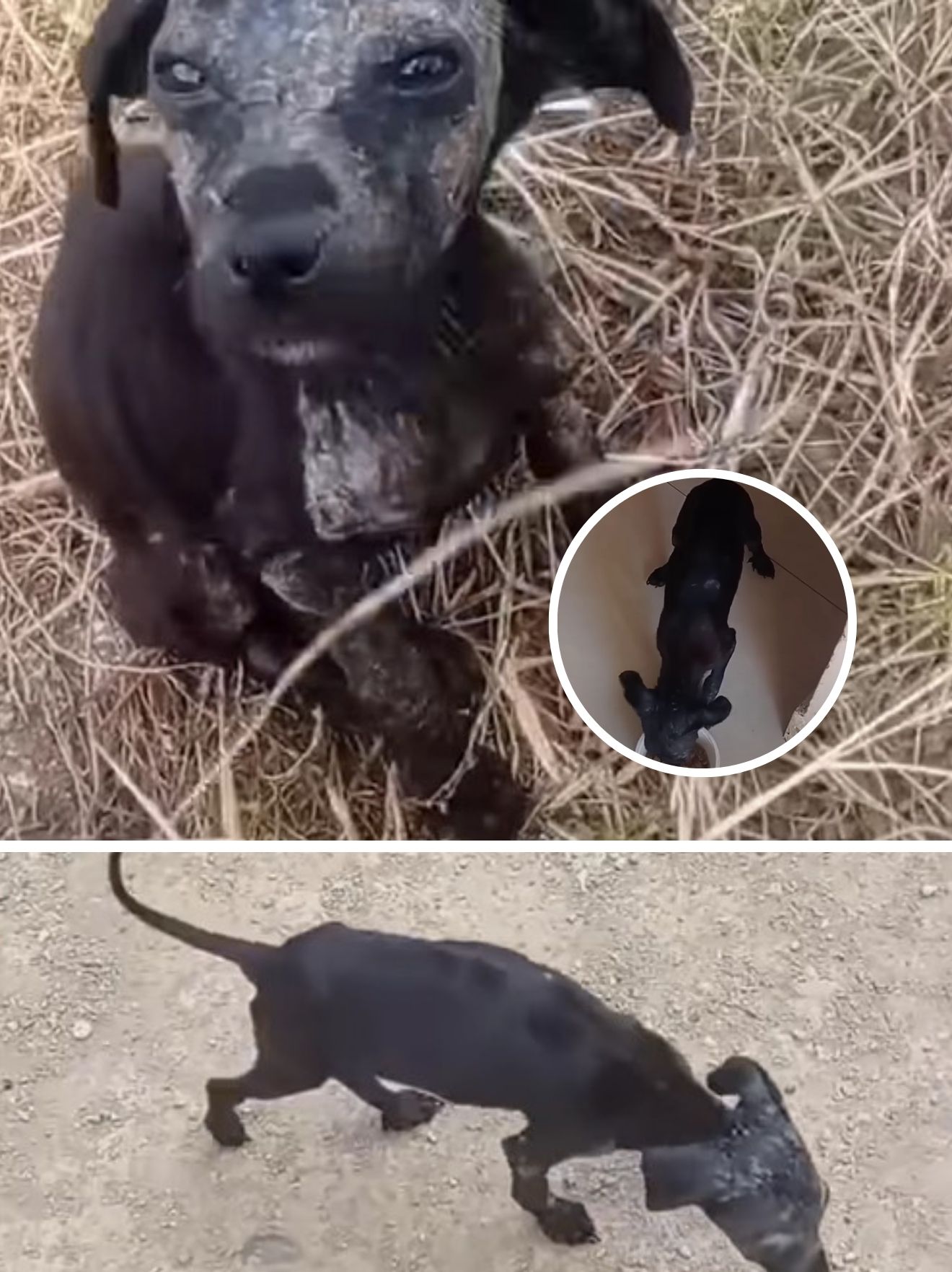
In a desolate stretch of land where few people passed and even fewer stopped, a tiny puppy sat alone, as if guarding the very spot where her world had fallen apart.
She had been abandoned there.
No food. No shelter. No mother. No direction.
And yet, she didn’t wander far.
Instead, she stayed exactly where she had been left — as though loyalty outweighed survival. As though she believed, with fragile hope, that the person who left her might come back.
When I first saw her, she looked almost frozen in place. Her small body was tense, her eyes wide with a heartbreaking mixture of fear and desperate hope. She didn’t run. She didn’t approach. She simply watched, trembling.
Up close, the reality was even more devastating. Her skin was rough and scaly, patches irritated and inflamed. Her eyes were swollen and sore, struggling against infection. Ticks clung to her fragile body, feeding on what little strength she had left. Though she was only three months old, she looked far older — worn down by neglect that no puppy should ever endure.
Without help, her future felt painfully uncertain.
Thankfully, fate intervened in the form of a mountain biker who happened to pass through that lonely stretch. He spotted the small, unmoving figure and sensed something was terribly wrong. He contacted me immediately. Within three hours, we had her safely on the way to the veterinarian.
At the clinic, the full picture came into focus. Severe skin issues. Painful eye inflammation. Heavy tick infestation. Malnourishment. The kind of neglect that doesn’t happen overnight.
Medication was administered to calm the inflammation and ease the relentless itching that must have tormented her day and night. As the treatments began, she seemed unsure how to respond to gentle hands. Affection was foreign. Care was unfamiliar.
And yet, she leaned into it.
We named her Amber.
In those first days, Amber barely let me out of her sight. If I stood, she stood. If I stepped away, her eyes tracked me anxiously. She had lost everything once. She wasn’t about to risk losing it again.
Slowly, the medication began to work. The itching eased. The swelling in her eyes reduced. Her appetite improved. With nourishment and safety, her fragile body started rebuilding itself. Within days, curiosity began to replace fear. She sniffed at new surroundings. She tested short, cautious steps away from my side — but never too far.
Then one afternoon, something unforgettable happened.
I had stepped a short distance away when Amber suddenly noticed me across the yard. For a split second, she froze — and then she ran. Not hesitantly. Not fearfully. She ran with purpose, tiny paws pounding against the ground, straight into my legs.
It was the first time she ran toward something instead of shrinking away from it.
That moment felt like trust being reborn.
Weeks passed, and Amber’s transformation became more visible. Her skin softened as treatment continued. Proper nutrition filled out her small frame. The once-silent puppy began to show personality — playful bursts of energy, gentle nudges for affection, soft tail wags that seemed almost shy.
But recovery is rarely a straight line.
One day, Amber suddenly cried out in pain and collapsed, unable to walk. Panic surged. We rushed her back to the veterinarian, fearing the worst. X-rays and tests followed. The diagnosis: gastritis. Severe inflammation causing intense discomfort.
It was another battle.
But this time, Amber wasn’t fighting alone.
With the right treatment and careful monitoring, her pain was brought under control. Gradually, she stood again. Then walked. Then trotted. Each step felt like a victory.
Amber’s journey wasn’t just about physical healing. It was about relearning the world. It was about discovering that not every human leaves. Not every hand harms. Not every goodbye is permanent.
The tiny puppy who once sat frozen in a deserted place now runs freely, secure in the knowledge that she belongs.
Sometimes abandoned dogs wait in the exact spot they were left because they don’t understand betrayal. They only understand loyalty.
Amber stayed because she hoped.
And because someone stopped, she survived.