4
On a cold autumn morning, when the forest floor was still silvered with dew and the air carried the earthy scent of fallen leaves, a single cry pierced the quiet. It was not the howl of a wolf nor the bark of a hunting hound in pursuit. It was sharp, desperate, and full of pain. Somewhere deep in the woods, a dog was trapped.
The forest stretched for miles, a patchwork of towering pines and skeletal birches. Hunters had passed through days before, setting wire snares meant for foxes and small game. These traps were silent and nearly invisible—thin loops of steel hidden among brush and leaves. They did not discriminate. Any creature unlucky enough to step inside would feel the sudden snap and tightening of cold metal.
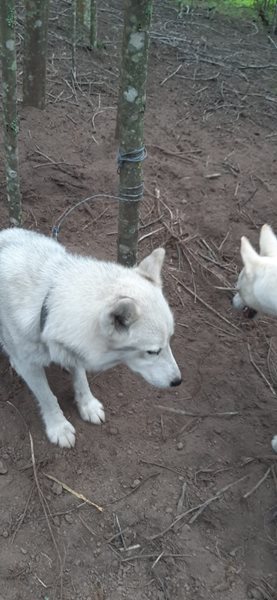
The dog had likely been wandering for days. No one knew his name. His fur, once golden brown, was now tangled and matted with dirt. His ribs were faintly visible beneath his coat, suggesting hunger and exhaustion. Perhaps he had been abandoned. Perhaps he had strayed too far from home. What mattered in that moment was that his front leg was caught in a wire snare, the loop biting deeper each time he struggled.
At first, he fought with frantic energy. He lunged backward, teeth snapping at the wire, paws scraping at the forest floor. But the more he pulled, the tighter the snare became. The thin cable cut into his skin, and warm blood darkened his fur. Eventually, exhaustion replaced panic. He lay on his side, chest heaving, eyes wide with fear.
Miles away, a local wildlife volunteer named Daniel was loading supplies into his aging pickup truck. Daniel had spent years rescuing injured animals from the surrounding countryside. Though not formally employed by any large organization, he worked closely with local veterinarians and animal welfare groups. His phone had buzzed earlier that morning with a report from a hiker who claimed to have heard a dog crying somewhere off a remote trail.
Most people might have dismissed it as the distant call of a wild animal. But Daniel had learned to trust such reports. Pain has a certain sound—one that lingers in the air.
He drove toward the forest entrance, gravel crunching beneath his tires. The sky was pale and overcast, promising rain later in the day. Slipping on sturdy boots and grabbing a first aid kit, thick gloves, and bolt cutters, he began the trek into the woods.
The forest swallowed him quickly. The sounds of the road faded, replaced by the rustling of leaves and the distant tapping of a woodpecker. He moved slowly, listening. Every few steps, he paused, scanning the trees and undergrowth.
Then he heard it—a faint whimper carried by the wind.
Daniel followed the sound, heart pounding. It grew louder with each careful step. Finally, in a small clearing surrounded by brambles, he saw the dog.
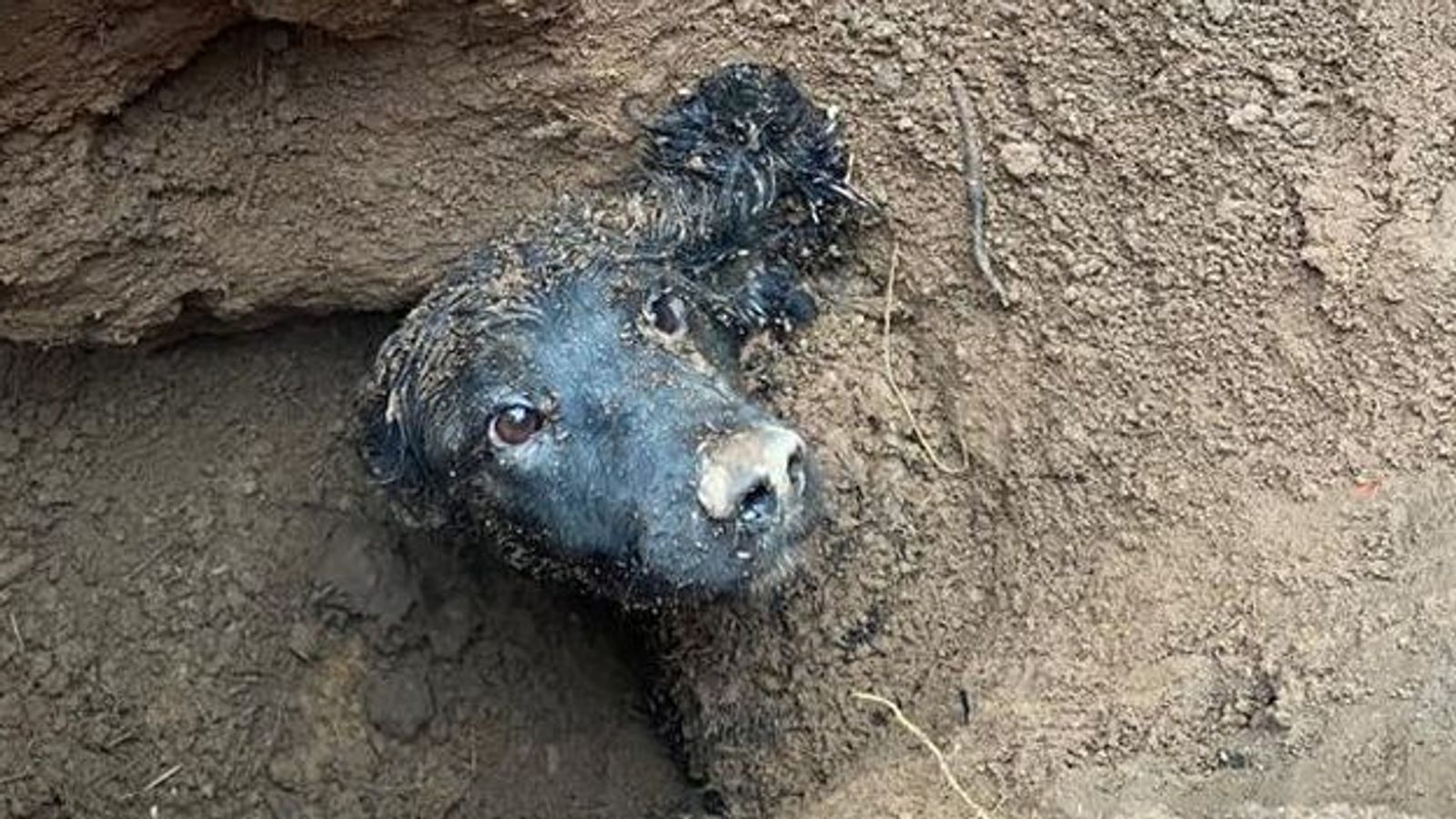
The sight was worse than he had imagined. The animal lay partially hidden by brush, his leg twisted at an unnatural angle. The wire snare glinted faintly in the gray light. The dog’s eyes flicked toward Daniel, wide and wary. A low growl rumbled in his throat—a reflex born of fear rather than aggression.
Daniel stopped several feet away and crouched down. “It’s okay,” he said softly, his voice calm and steady. “I’m here to help.”
The dog did not understand the words, but he sensed the tone. Still, pain and terror had built a wall of mistrust. His body trembled.
Rescuing a trapped animal requires patience. A frightened dog can bite, not out of malice but survival instinct. Daniel slowly removed his jacket and laid it on the ground. He avoided direct eye contact, which can feel threatening to animals. Inch by inch, he moved closer.
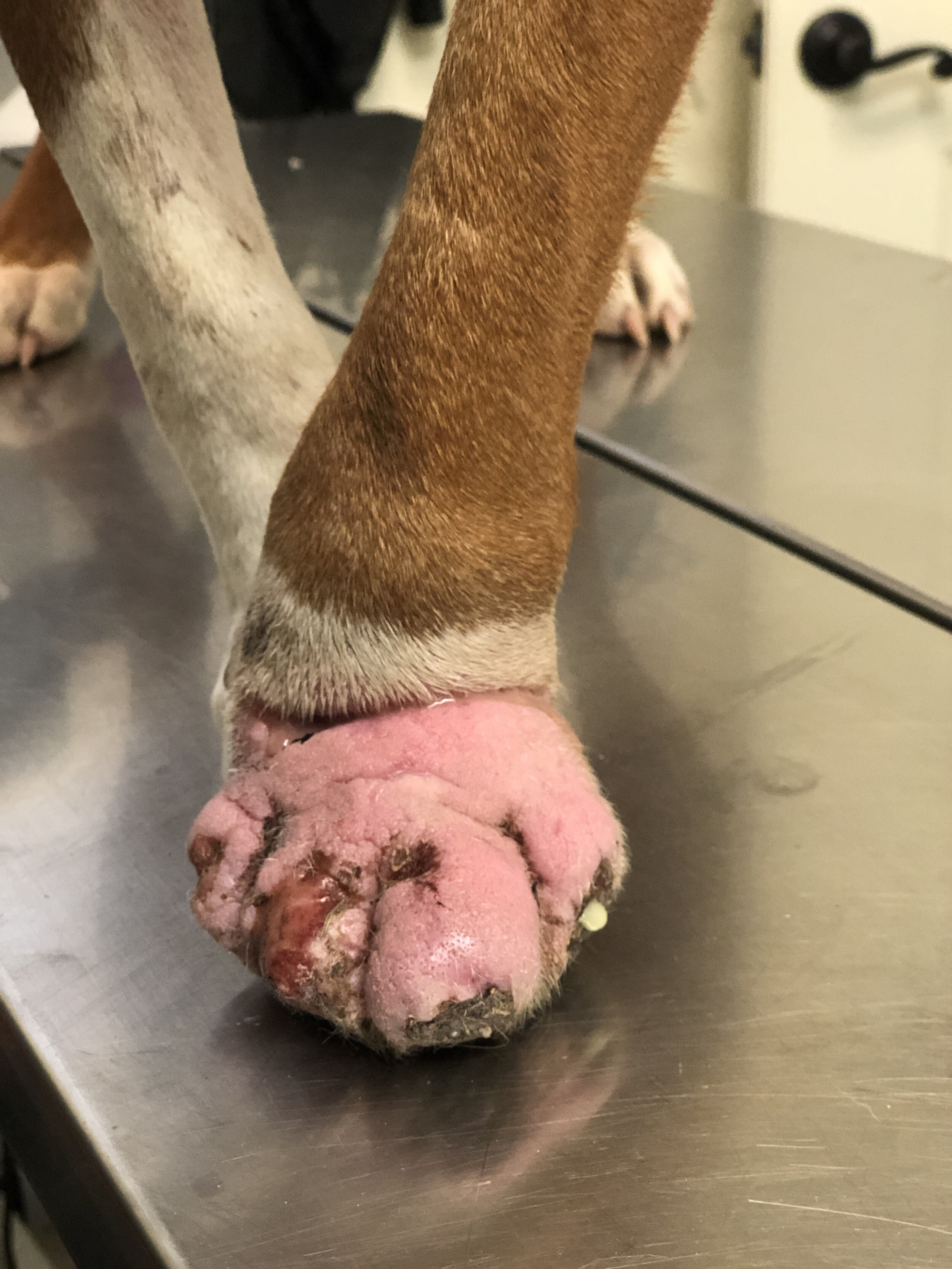
The wound was severe. The wire had cut deeply into the leg, and swelling had already begun. Daniel knew that every minute mattered. Infection could set in quickly, and prolonged restriction of blood flow might mean permanent damage.
He slipped on thick protective gloves and gently tossed the jacket over the dog’s head, muffling his vision just enough to reduce panic. The dog thrashed weakly, but exhaustion limited his strength. Working swiftly yet carefully, Daniel located the tightening mechanism of the snare.
Wire snares are cruelly efficient. The loop tightens under pressure and locks in place. Using bolt cutters, Daniel positioned the blades around the cable. “Almost there,” he murmured.
With a sharp metallic snap, the wire gave way.
The tension released instantly. The dog yelped as blood rushed back into the injured limb. Daniel quickly removed the remaining loop and assessed the damage. The leg was deeply lacerated, and the paw was swollen, but it was still attached and warm—signs that amputation might be avoidable.
He cleaned the wound as best he could in the field, pouring sterile saline over the cut. The dog whimpered but did not resist. Shock had begun to set in; his body trembled uncontrollably.
Daniel wrapped the leg in gauze and secured it with bandaging tape from his kit. Then, moving slowly, he lifted the dog into his arms. The animal was lighter than expected.
The walk back to the truck felt longer than before. Each step had to be careful and steady. Rain began to fall, a soft drizzle that darkened the soil and slicked the leaves. By the time Daniel reached his vehicle, both he and the dog were damp and cold.
Inside the truck, Daniel placed the dog on a blanket and drove straight to the nearest veterinary clinic. The windshield wipers beat rhythmically, marking time against the urgency of the moment.
At the clinic, the staff moved quickly. The dog was placed on a stainless-steel examination table under bright lights. A veterinarian examined the leg, her expression serious but hopeful.
“The wire cut deep,” she said, “but I think we can save it.”
The dog was sedated, and the wound was thoroughly cleaned and stitched. Antibiotics were administered to prevent infection, and pain medication eased his suffering. X-rays revealed no broken bones—another small miracle.
When the dog awoke hours later, he was in a quiet recovery kennel. A soft blanket lined the floor, and a bowl of water sat within reach. His leg was bandaged neatly, and an intravenous line delivered fluids into his system.
Daniel returned that evening to check on him. The dog lifted his head weakly, eyes clearer now. There was still fear there—but also curiosity.
Over the next few days, the transformation began. With proper care, nutritious food, and rest, the dog’s strength slowly returned. The swelling in his leg decreased, and he began to place tentative weight on it.
The clinic staff gave him a temporary name: Ranger, in honor of the forest where he had been found.
Ranger’s personality emerged gradually. He was gentle, if cautious. He flinched at sudden movements but leaned into gentle strokes. When Daniel visited, Ranger’s tail gave a small, uncertain wag.
Word of the rescue spread through the community. Social media posts shared his story, accompanied by photos of his recovery. Many expressed outrage at the use of wire snares, calling for stricter enforcement of wildlife protection laws. Others simply offered donations to cover veterinary costs.
Weeks passed. Ranger’s stitches were removed, leaving behind a thin scar—a permanent reminder of his ordeal. Physical therapy exercises helped rebuild muscle in his injured leg. Though he would likely always carry a slight limp, he could run again.
The question remained: where would Ranger go?
No one had come forward to claim him. Flyers posted in nearby towns yielded no results. It seemed he had no home to return to.
Daniel faced a decision. He had rescued many animals over the years, but he could not keep them all. Yet something about Ranger lingered in his thoughts—the resilience in his eyes, the quiet trust that had replaced fear.
One afternoon, Daniel took Ranger outside the clinic for a supervised walk. The sky was clear, the air crisp. Ranger sniffed the grass cautiously, then looked up at Daniel.
In that gaze was recognition.
Daniel knelt down and scratched behind Ranger’s ears. The dog’s tail wagged more confidently now.
“I think you’ve found your home,” Daniel said softly.
The adoption papers were signed a week later.
Life in Daniel’s home was different from the forest. There were warm floors, regular meals, and a soft bed by the fireplace. At first, Ranger startled at unfamiliar sounds—the hum of appliances, the slam of a door. But patience and kindness reshaped his world.
Each morning, Daniel and Ranger walked together along safer, well-maintained trails. Ranger moved more easily with each passing month. The limp became less noticeable.
The forest that had once nearly claimed his life became, once again, a place of exploration—this time without hidden dangers.
Ranger’s story did more than save one dog. It sparked conversations about humane wildlife management and responsible outdoor practices. Local authorities reviewed regulations regarding snare traps. Educational campaigns encouraged hikers to report suspicious devices.
For Daniel, the rescue reaffirmed a belief he had carried for years: compassion matters, even in the quiet corners of the world where suffering often goes unseen.
The forest remains vast and unpredictable. Traps may still be set, and dangers still lurk. But on that autumn morning, a single act of courage and care altered the course of a life.
Ranger no longer cries out in pain beneath tangled branches. Instead, he sleeps peacefully by a warm hearth, occasionally dreaming—perhaps of open fields rather than tightening wire.
Scars remain, both visible and unseen. Yet they tell a story not only of cruelty but of rescue, healing, and second chances.
In the end, it was not strength that saved Ranger, nor luck alone. It was the willingness of one person to listen to a distant cry and follow it into the woods.
And sometimes, that is enough.