https://googleads.g.doubleclick.net/pagead/ads?gdpr=0&client=ca-pub-8681813503854240&output=html&h=280&adk=4037880628&adf=3528882236&w=650&fwrn=4&fwrnh=1
The school where he worked reflected these conditions. Classrooms were simple, materials were limited, and during the long winters, heating relied on traditional methods. It was an environment that required adaptability and patience.
At first, the adjustment was not easy.
Communication posed challenges due to language differences. Cultural norms were unfamiliar. Even the climate—especially the harsh winters—was something he had to learn to manage.
Yet, despite these obstacles, something quickly stood out to him: the students’ eagerness to learn.
Their curiosity, respect, and determination helped bridge many of the gaps he initially felt. Even when communication was difficult, their effort and enthusiasm created a strong foundation for connection.
Three Students Who Left a Lasting Impression
Among all his students, three sisters gradually stood out.
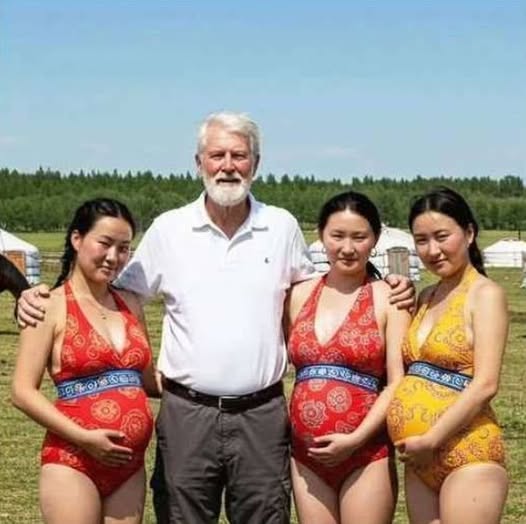
Their names were Amina, Sarnai, and Bolormaa. They were known in their community for their dedication to their studies and their strong sense of responsibility.
Over time, Michael learned more about their situation. The sisters had lost their parents several years earlier and were being raised by their grandmother. Their home was a traditional ger, a circular, portable dwelling commonly used in Mongolia.
Life for them was not easy.
Resources were limited, and daily living required constant effort. Yet, despite these challenges, the sisters consistently showed up to school prepared and motivated.
Michael began to notice small but meaningful details:
- Their textbooks were carefully maintained, often showing signs of repeated use
- School supplies were shared and used efficiently
- Clothing and shoes were repaired multiple times to extend their use
These observations spoke volumes about their resilience and determination.
They were not just attending school—they were committed to making the most of every opportunity available to them.
An Unexpected Invitation
One winter afternoon, a heavy snowstorm made travel difficult. As conditions worsened, it became clear that leaving the school safely would not be possible right away.
During this time, the sisters offered Michael a simple but meaningful invitation—to come to their home and wait until the storm passed.
At first, he hesitated. He didn’t want to impose or create any inconvenience for them or their grandmother.
However, he eventually accepted.
When he arrived, he was welcomed with warmth and kindness.
Inside the ger, the space was modest but thoughtfully arranged. A coal stove provided warmth against the cold outside. The scent of traditional milk tea filled the air. Decorations, though simple, reflected care and pride.
What stood out most was not the physical space, but the atmosphere.
There was a strong sense of unity and mutual support within the household. Despite the challenges they faced, there was comfort, dignity, and a quiet sense of stability.
This visit marked the beginning of something deeper.
Building a Meaningful Bond
After that day, Michael began visiting more often.
Initially, these visits were focused on helping the sisters with their studies. He provided additional support with English, helping them practice and improve.
But over time, the relationship became more reciprocal.
The sisters began sharing their culture with him. They introduced him to traditional songs, explained customs, and told stories about life in their community.
They spoke about their dreams and their hopes for the future.
In return, Michael shared aspects of his own life—stories about Montana, its landscapes, and his experiences growing up.
These exchanges created a meaningful connection built on mutual respect and genuine interest.
It was no longer just about teacher and students.
It was about understanding one another as people.
A Shift in Perspective
Michael had grown up as an only child. His own family life had been relatively quiet, shaped by distance and limited interaction.
Spending time with the sisters and their grandmother offered him a new perspective on family dynamics.
He observed how they supported one another, how responsibilities were shared, and how they found moments of joy even in difficult circumstances.
This experience led to a personal realization.
Connection does not always come from familiar places or traditional structures. Sometimes, it develops naturally through shared experiences, empathy, and time.
The sense of belonging he felt was unexpected, yet deeply meaningful.
Facing Challenges Together
Winter in Mongolia can be extremely severe. Temperatures can drop dramatically, creating difficult living conditions.
1wk4BPC1XqCNlrXMZTI_aem_8J_RqGa6XkKnqCuQhPRG7Q&lle=1
During one particularly harsh period, part of the family’s ger was damaged.
Concerned for their well-being, Michael decided to take action. He reached out to friends and contacts back home, explaining the situation and asking for support.
He organized a small fundraising effort.
It was not a large or highly publicized campaign, but it generated enough assistance to help repair the structure and provide additional heating resources.
While the financial support made a practical difference, the emotional impact was equally important.
It strengthened the trust between them and reinforced the sense that they were not alone in facing challenges.
A Moment of Achievement
Months later, the sisters were given an opportunity to participate in a school competition in the capital city.
They were asked to prepare and deliver a speech in English about their aspirations.
For them, this was a significant step. Traveling outside their community was rare, and presenting in a second language added an extra layer of challenge.
Michael accompanied them, offering guidance and encouragement.
When they stood on stage, their voices were initially hesitant.
But as they continued, their confidence grew.
They spoke about the importance of education, their cultural identity, and their desire to support their family in the future.
Their performance earned them second place.
Although the prize itself was modest, the experience was invaluable. It represented growth, courage, and recognition of their efforts.
That evening, they gathered in a small guesthouse to reflect and celebrate quietly.
During this moment, Amina expressed something simple but deeply meaningful—she told Michael that he felt like a brother to them.
It was a statement that carried emotional weight.
It reflected trust, appreciation, and a bond that had grown beyond expectations.
Saying Goodbye
As Michael’s time in Mongolia came to an end, he faced a difficult transition.
Returning home had always been part of his plan, but leaving now felt different.
At the airport, the farewell was emotional.
Their grandmother gave him a small, embroidered cloth—a traditional symbol representing protection and gratitude.
The sisters expressed their appreciation and reminded him that distance does not erase meaningful relationships.
It was not a final goodbye, but rather the beginning of a new chapter.
Staying Connected
After returning to Montana, Michael resumed his life and work. However, the connection he had formed did not fade.
Through video calls and messages, he remained involved in the sisters’ lives.
He continued to support their education by helping them apply for scholarships, improve their English skills, and explore new opportunities.
His experience also began to inspire others around him.
Friends and community members became more interested in international programs and cultural exchange.
What started as a personal journey gradually influenced a wider circle.