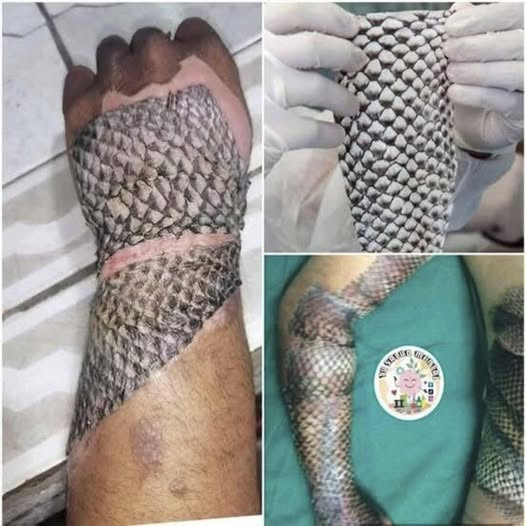
In an era where medical advancements are often associated with high-tech equipment and costly treatments, a surprisingly simple innovation is drawing global attention: the use of tilapia fish skin in burn care. Researchers and healthcare professionals are increasingly exploring this natural material as a cost-effective and practical option for supporting wound healing in controlled clinical settings.
This approach reflects a growing trend in medicine—combining scientific research with sustainable resources to improve patient care while reducing costs.
A New Direction in Burn Treatment
Traditional burn care typically involves topical medications, synthetic dressings, and, in severe cases, skin graft procedures. While effective, these treatments can be expensive and may require frequent dressing changes, which can be uncomfortable for patients.
In response, researchers began investigating alternative materials that could offer similar benefits with improved comfort and accessibility. Tilapia skin quickly emerged as a strong candidate due to its structure and widespread availability, especially in regions where the fish is commonly consumed.
Why Tilapia Skin?
Scientific studies have shown that tilapia skin is rich in collagen—particularly types I and III—which are essential for maintaining skin structure and supporting the body’s natural healing process.
Key properties that make tilapia skin suitable for medical research include:
- A structure similar to human skin
- Strong moisture-retention capabilities
- Ability to act as a protective barrier
- Effective adherence to wound surfaces under medical supervision
These characteristics allow it to function as a temporary covering for certain types of burn injuries.
From Waste to Medical Resource
Initial research into this method began in Brazil, where medical teams sought affordable solutions for burn treatment within public healthcare systems. Recognizing that tilapia skin is often discarded as waste, researchers explored how it could be repurposed safely for medical use.
Before application, the skin undergoes strict processing, including:
- Thorough cleaning
- Sterilization to remove contaminants
- Preservation using medical-grade techniques
- Controlled storage conditions
Only after meeting rigorous safety standards is it considered suitable for clinical environments.
Clinical Use and Patient Experience
In supervised settings, processed tilapia skin may be applied directly to burn wounds as a temporary dressing. One of its key advantages is that it can remain in place longer than traditional dressings, reducing the need for frequent changes.
This can lead to:
- Less disruption to healing tissue
- Reduced discomfort for patients
- Lower demand on medical resources
Healthcare professionals closely monitor each case to ensure safety and effectiveness.
Potential Benefits Observed
Early clinical observations suggest several advantages when used appropriately:
- Maintains a moist environment that supports healing
- Provides a protective barrier against infection
- Reduces handling of sensitive wounds
- Offers a cost-efficient alternative in resource-limited settings
However, outcomes vary depending on the severity of the burn and the patient’s overall condition.
Safety and Limitations
Experts emphasize that tilapia skin is not a universal replacement for standard treatments. Its use is limited to specific cases and must always be conducted under professional medical supervision.
Important considerations include:
- Strict sterilization and processing requirements
- Application only by trained healthcare providers
- Continuous monitoring for any adverse reactions
Patients are strongly advised not to attempt this method outside clinical settings.
Growing Global Interest
As awareness of this innovation spreads, healthcare providers and research institutions worldwide are showing interest in further studying its potential. Its appeal lies in its accessibility, affordability, and sustainability.
In regions with limited medical resources, this method could complement existing treatments and expand access to care—provided it meets regulatory and safety standards.
A Sustainable Approach to Healthcare
Beyond its medical benefits, the use of tilapia skin highlights an important shift toward sustainability. By repurposing a natural byproduct that would otherwise be discarded, this approach aligns with global efforts to reduce waste and promote resource efficiency.
Looking Ahead
Ongoing research is focused on refining processing techniques, ensuring consistent quality, and exploring how tilapia skin can be integrated with modern wound-care technologies. Future developments may expand its applications to other types of wounds, though further clinical validation is required.
Conclusion
The use of tilapia skin in burn care represents a compelling example of how innovation can come from unexpected sources. By combining natural materials with scientific rigor, healthcare providers are discovering new ways to improve patient outcomes while addressing cost and accessibility challenges.
While still under study, this approach underscores a broader message: effective medical solutions don’t always have to be complex—they just need to be safe, practical, and thoughtfully applied.